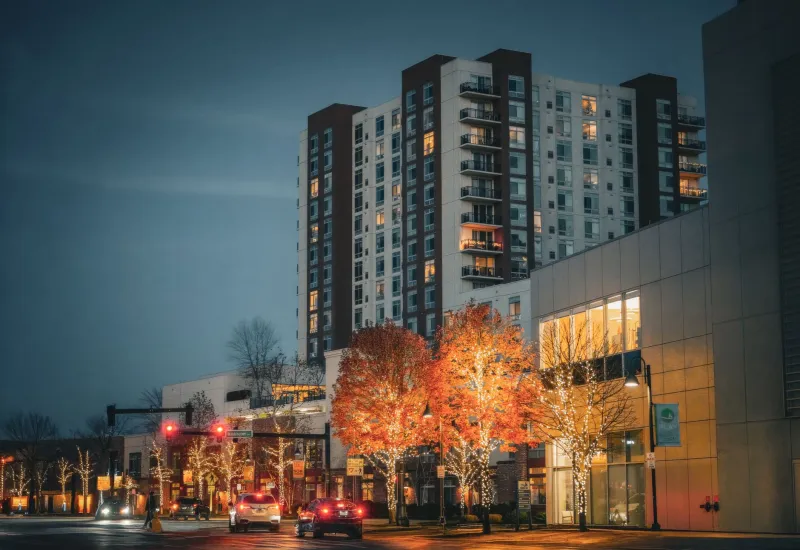
Urban Ascent: How Downtown Tower Living Reclaimed the Wealth-Building Crown from the American Suburb
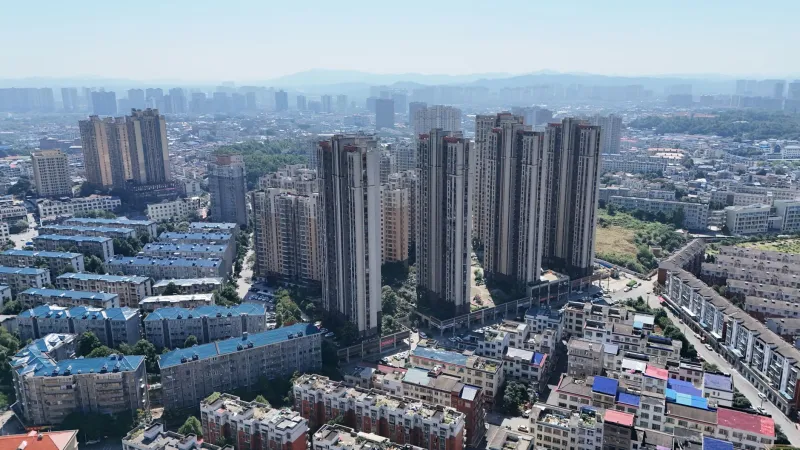
The suburban single-family home has occupied a near-mythological position in the American financial imagination for most of the postwar era. It was, for generations of middle- and upper-middle-class households, the primary mechanism through which ordinary families converted income into lasting wealth. That narrative, so deeply embedded in the cultural and economic fabric of the country, is now being revised — not by ideology, but by data.
Across a growing number of major American metropolitan areas, residential tower units in urban cores are appreciating at rates that have, for the first time in roughly twenty years, begun to outpace suburban single-family home values on a sustained, multi-year basis. The shift is not uniform, and it is not without nuance. But the trend lines are real, and the structural forces sustaining them are significant.
What Changed — and When
The suburban advantage in appreciation was never simply a matter of preference. It was underwritten by a specific set of economic and demographic conditions: expanding highway infrastructure, the proliferation of quality suburban school districts, employer migration to suburban office campuses, and the financial incentives embedded in the thirty-year fixed-rate mortgage system.
Those conditions have not disappeared, but they have weakened materially. The pandemic-era suburban surge — widely documented and broadly anticipated to persist — proved more transient than many analysts projected. By 2022 and into 2023, urban core markets in cities including Miami, Austin, Nashville, Denver, and New York began registering renewed price momentum in the vertical residential segment, even as suburban markets in many of those same metros experienced valuation softening.
The reversal reflects a convergence of forces that were building well before the pandemic accelerated certain trends and then, in some cases, reversed them.
The Generational Engine
Millennials, now the largest cohort of home purchasers in the United States, have demonstrated a persistent and well-documented preference for urban environments. This preference was initially attributed to the life stage characteristics of young adults without children. As that cohort has aged, married, and in many cases started families, the anticipated mass migration to the suburbs has materialized — but in far smaller proportions than historical precedent suggested.
A meaningful segment of millennial households has chosen to remain in urban environments and adapt their living arrangements accordingly — purchasing larger units, prioritizing buildings with family-oriented amenities, and locating in neighborhoods with accessible green space and quality urban schools. That demand base, sustained and growing as the millennial cohort moves through its peak earning years, is providing durable support for urban tower valuations.
Behind them, Gen Z — now entering the housing market in its earliest cohorts — shows urban preference metrics that are, by most measures, even more pronounced. The pipeline of demand for vertical urban living is not thinning. It is deepening.
Remote Work and the Redefinition of Location Value
The remote and hybrid work transition has produced a counterintuitive outcome for urban real estate. Conventional wisdom in 2020 and 2021 held that the untethering of workers from office locations would accelerate suburban and exurban migration by eliminating the commute penalty. In some markets, that prediction held — at least temporarily.
What emerged more durably, however, was a recalibration of what location value means for a household that commutes two or three days per week rather than five. For that household, proximity to urban amenities, cultural infrastructure, restaurant density, and social networks becomes relatively more valuable, while the suburban premium for school districts, yard space, and highway access becomes relatively less determinative.
The result is a buyer profile that is willing to pay for urban density in ways that previous generations, anchored to daily office commutes, were not. Tower units that deliver walkable access to employment, entertainment, and services are capturing that willingness to pay in their appreciation trajectories.
The Infrastructure Dividend
American cities are, in many cases, in the midst of meaningful infrastructure investment cycles — transit expansion, streetscape improvement, mixed-use rezoning, and the conversion of obsolete commercial stock into residential and hospitality uses. These investments tend to concentrate value creation in urban cores and established inner-ring neighborhoods rather than distributing it across suburban geographies.
For tower investors, this creates a compounding dynamic. A building positioned in a neighborhood benefiting from active infrastructure investment captures both the organic appreciation driven by demand fundamentals and the location premium generated by public and private capital deployment in its immediate surroundings.
What Investors Should Understand About This Shift
The appreciation reversal does not mean that every downtown tower unit outperforms every suburban single-family home. Market selection, building quality, unit positioning, and timing remain critical variables. What the data does indicate is that the structural tailwinds that historically disadvantaged urban vertical product relative to suburban detached housing have weakened — and in several key markets, reversed.
For the investor building a long-term position in residential real estate, this shift carries a clear implication: the risk-adjusted case for urban tower exposure is stronger today than it has been at any point in the past two decades. The demographic demand base is deep, the infrastructure investment cycle is supportive, and the cultural recalibration of what constitutes a desirable living environment is running in the direction of vertical urban living.
The suburb is not finished. But it is no longer the only place where American real estate wealth is built at scale. That distinction now belongs, increasingly, to the skyline.