The Mechanics of Value: How a Tower's Operational Infrastructure Determines Whether Your Investment Appreciates or Deteriorates
There is a reliable pattern in how first-time tower investors approach due diligence. They study the floor plan. They evaluate the view. They examine the finishes, the ceiling height, the kitchen appliances, and the bathroom tile. What they rarely examine — at least not with comparable rigor — is the infrastructure that makes the building function as a coherent, high-performance residential environment over time.
That oversight is understandable. Elevator dispatch systems and building automation platforms do not photograph well. They do not feature in developer marketing materials. They are not discussed over champagne at a sales preview event. Yet they are, in many cases, the most consequential determinants of whether a tower investment retains its value, attracts quality residents, and avoids the spiral of deferred maintenance and reputational decline that afflicts so many buildings past their initial decade of operation.
The Elevator Equation
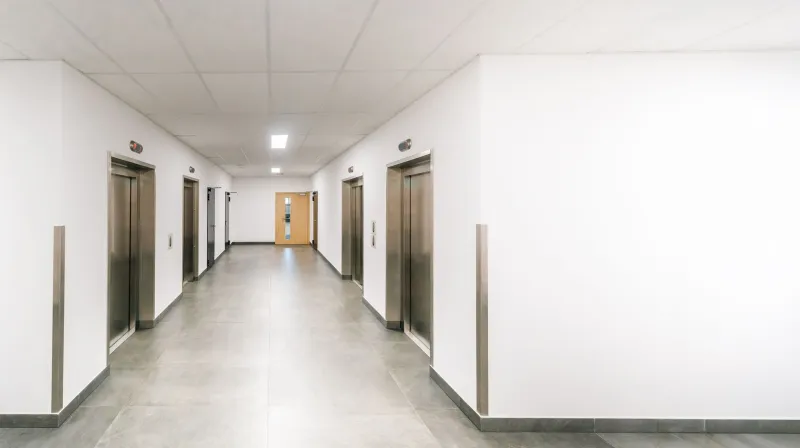
In a residential tower, the elevator system is not merely a convenience — it is the primary circulation infrastructure of the building. Its performance characteristics directly shape the daily experience of every resident, every guest, and every prospective tenant or buyer who enters the property.
Elevator wait times in residential towers are a function of several interacting variables: the number of cabs relative to the building's unit count and floor height, the dispatch algorithm governing cab assignment, the mechanical speed rating of the units, and the maintenance history of the system. In well-engineered towers, average wait times during peak morning and evening periods remain below sixty seconds. In buildings where the elevator infrastructure is undersized or aging, wait times routinely extend to three or four minutes — a seemingly minor inconvenience that, experienced twice daily, becomes a persistent source of resident dissatisfaction.
For investors evaluating a prospective acquisition, several questions merit direct answers: How many elevator cabs serve the residential floors? What is the building's total unit count relative to that cab count? When were the cabs last modernized? Does the building use a destination dispatch system — the technology that groups passengers traveling to similar floor destinations into the same cab, materially reducing wait times — or a conventional call-button system?
Buildings that have invested in destination dispatch modernization consistently report higher resident satisfaction scores and lower turnover rates than comparable properties operating legacy systems. That correlation is not coincidental.
Lobby Dynamics and the First Impression Problem
The lobby of a residential tower serves dual functions: it is the primary security interface for the building and the first physical experience that residents, guests, and prospective buyers encounter on every visit. Lobby congestion — the accumulation of package deliveries, concierge bottlenecks, and insufficient resident management infrastructure — is an increasingly significant operational liability in buildings that were designed before the e-commerce era transformed residential delivery volumes.
A building receiving several hundred package deliveries per week into a lobby designed to handle a fraction of that volume creates a cascade of problems. Packages accumulate in corridors. Concierge staff become overwhelmed. Security protocols are compromised as delivery personnel require extended access. The visual disorder of a congested lobby communicates, to every person who enters, that the building is struggling to manage its own basic operations.
Investors should assess whether a prospective building has implemented a dedicated package management system — either a staffed package room with controlled access or an automated parcel locker installation — and whether the lobby circulation plan accommodates concurrent delivery, concierge, and resident traffic without creating congestion points.
Building Automation and Predictive Maintenance
The gap between towers built to modern building automation standards and those operating legacy mechanical systems is widening rapidly — and it is a gap with direct financial consequences for investors.
Modern building automation platforms integrate HVAC management, lighting control, water management, elevator monitoring, and security systems into a unified digital infrastructure that enables property management teams to monitor building performance in real time, identify developing mechanical issues before they become costly failures, and optimize energy consumption in ways that reduce operating costs and, in many jurisdictions, satisfy increasingly stringent municipal energy performance requirements.
Buildings without this infrastructure rely on reactive maintenance protocols — problems are addressed after they manifest, rather than anticipated and prevented. The financial implications are significant. Emergency mechanical repairs consistently cost three to five times the expense of planned preventive maintenance for comparable systems. Repeated emergency interventions deplete reserve funds, generate special assessments, and create the kind of operational instability that sophisticated buyers and tenants recognize and price into their decisions.
When reviewing a building's financials, investors should examine the reserve fund study — a document that projects the anticipated capital replacement costs for major building systems over a defined period — alongside the actual reserve fund balance. A building with an underfunded reserve relative to its projected capital needs is carrying a latent liability that will eventually surface as an assessment or a deferred maintenance crisis.
The Management Quality Signal
Building infrastructure does not operate in isolation from the human systems responsible for maintaining it. Property management quality is a variable that is difficult to quantify but not difficult to assess with a disciplined approach.
Review the building's maintenance request resolution metrics if they are available through the homeowners association or management company. Examine online resident reviews — not for individual complaints, which are inevitable in any building, but for patterns. Consistent themes around unresolved maintenance issues, unresponsive management, or deteriorating common areas signal an organizational failure that physical infrastructure alone cannot compensate for.
Request the minutes from the last several homeowners association meetings. The topics discussed, the issues raised by residents, and the responses provided by management offer a candid window into the operational health of the building that no marketing document will provide.
Infrastructure as the Foundation of Lasting Value
The towers that hold their value across market cycles, attract and retain quality residents, and generate consistent returns for their investors share a common characteristic: they were built, and are maintained, to operational standards that prioritize long-term performance over short-term cost minimization.
For the discerning investor, the due diligence process must extend beyond the visible and into the mechanical, the operational, and the managerial. The building that looks exceptional on the day of purchase and continues to perform exceptionally a decade later is the building whose infrastructure was designed and maintained to the same standard as its finishes.
At Sanyoginza Tower, the standard is clear: the quality of a tower investment is ultimately determined not by what you see when you walk in, but by how well everything you cannot see continues to work long after you have closed.